


As a honeycomb paper supplier, I've witnessed firsthand the increasing demand for honeycomb paper in various industries due to its lightweight, cost - effective, and eco - friendly nature. However, one of the limitations that often comes up is its relatively low fire - resistance. In this blog, I'll share some effective ways to improve the fire - resistance of honeycomb paper.
Understanding the Basics of Honeycomb Paper
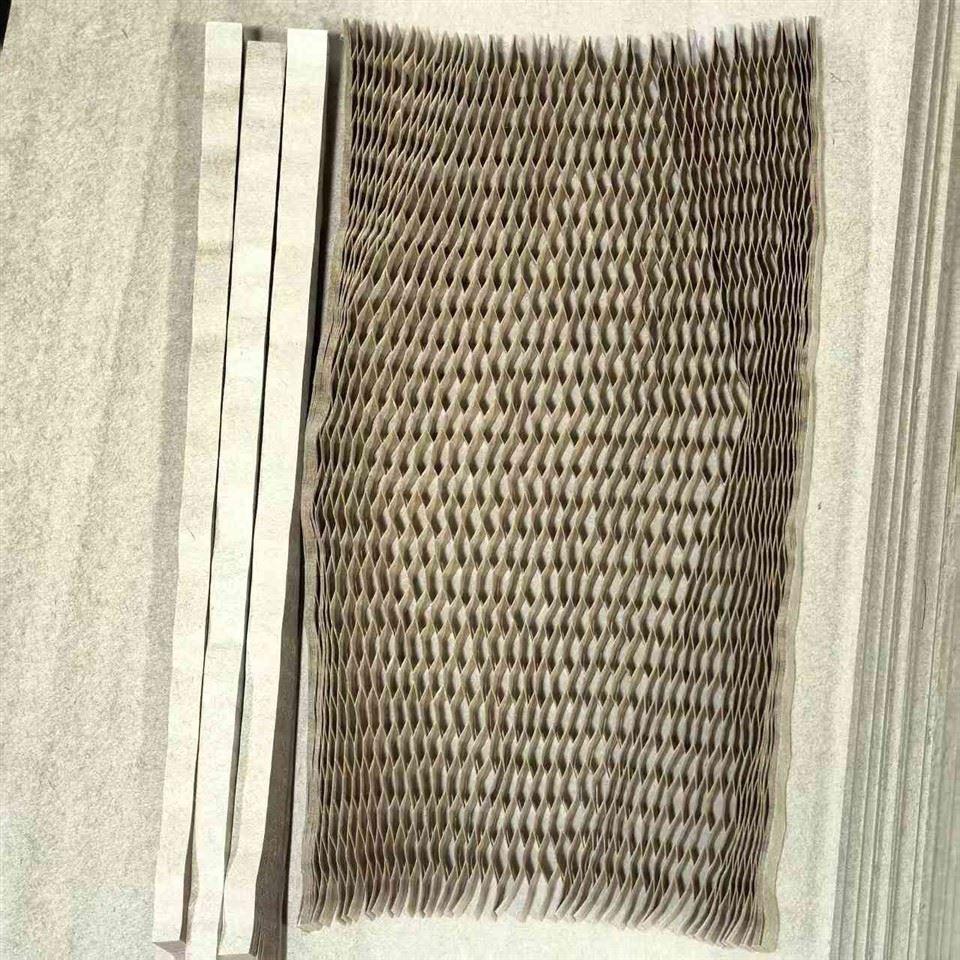
Honeycomb paper is a packaging material with a unique honeycomb structure. It's made by gluing multiple layers of paper together to form hexagonal cells, which gives it high strength - to - weight ratio. Our company offers a variety of honeycomb paper products, such as Honeycomb Paper In Sheets, 3D Honeycomb Paper Mat, and Honeycomb Paper Roll. These products are widely used in packaging, construction, and automotive industries.
Why Improve Fire - Resistance?
The need for fire - resistant honeycomb paper is crucial, especially in applications where fire safety is a top concern. For example, in the construction industry, honeycomb paper is used as insulation material. If it catches fire easily, it can spread the fire quickly and pose a serious threat to human lives and property. Similarly, in the packaging of flammable or heat - sensitive products, fire - resistant honeycomb paper can prevent accidental fires during storage and transportation.
Methods to Improve Fire - Resistance
1. Flame - Retardant Chemical Treatments
One of the most common ways to improve the fire - resistance of honeycomb paper is by treating it with flame - retardant chemicals. These chemicals work by either releasing non - flammable gases when heated, which dilute the oxygen around the paper, or by forming a protective char layer on the surface of the paper, which acts as a barrier to heat and oxygen.
There are several types of flame - retardant chemicals that can be used. For example, halogen - based flame retardants, such as brominated and chlorinated compounds, have been widely used in the past due to their high efficiency. However, they have raised environmental and health concerns because they can release toxic substances when burned. As a result, more environmentally friendly alternatives, such as phosphorus - based and nitrogen - based flame retardants, are becoming more popular.
To apply the flame - retardant chemicals, the honeycomb paper can be dipped into a solution containing the chemicals or sprayed with the solution. After the treatment, the paper needs to be dried thoroughly to remove the excess moisture.
2. Incorporating Fire - Resistant Fibers
Another approach is to incorporate fire - resistant fibers into the honeycomb paper during the manufacturing process. Fibers such as glass fibers, ceramic fibers, and aramid fibers have high melting points and are difficult to burn. By adding these fibers to the paper pulp, the fire - resistance of the honeycomb paper can be significantly improved.
Glass fibers are a popular choice because they are relatively inexpensive and readily available. They can enhance the mechanical strength of the honeycomb paper as well as its fire - resistance. Ceramic fibers, on the other hand, have excellent high - temperature resistance and can withstand very high temperatures without melting or burning. Aramid fibers, known for their high strength and heat resistance, are often used in high - performance applications.
3. Coating with Fire - Resistant Materials
Coating the honeycomb paper with fire - resistant materials is also an effective method. For example, a thin layer of intumescent coating can be applied to the surface of the honeycomb paper. Intumescent coatings are designed to expand when exposed to heat, forming a thick, insulating char layer that protects the underlying paper from the fire.
Other fire - resistant coatings, such as silicone - based and cement - based coatings, can also be used. Silicone - based coatings have good flexibility and can adhere well to the paper surface, while cement - based coatings provide a hard and durable protective layer.

Testing and Quality Control
After improving the fire - resistance of honeycomb paper, it's essential to conduct proper testing to ensure that the desired level of fire - resistance is achieved. There are several international standards for testing the fire - resistance of materials, such as ASTM E84 and UL 94.
ASTM E84 measures the surface burning characteristics of building materials, including the flame spread index and the smoke - developed index. UL 94 is a standard for testing the flammability of plastic materials, which can also be applied to honeycomb paper. By conducting these tests, we can ensure that our fire - resistant honeycomb paper meets the required safety standards.
In addition to fire - resistance testing, other quality control measures, such as checking the mechanical properties and the chemical composition of the treated paper, should also be carried out to ensure the overall quality of the product.
Cost - Benefit Analysis
Improving the fire - resistance of honeycomb paper does come with additional costs. The cost of flame - retardant chemicals, fire - resistant fibers, and coatings can increase the production cost. However, it's important to consider the long - term benefits.
In industries where fire safety is a critical issue, using fire - resistant honeycomb paper can reduce the risk of fire accidents, which can save a significant amount of money in terms of property damage, liability claims, and potential business interruption. Moreover, as more and more regulations are being introduced to enforce fire safety standards, having fire - resistant honeycomb paper can give our company a competitive edge in the market.
Conclusion
Improving the fire - resistance of honeycomb paper is a complex but necessary task. By using flame - retardant chemical treatments, incorporating fire - resistant fibers, and coating with fire - resistant materials, we can significantly enhance the fire - safety performance of our honeycomb paper products.
As a honeycomb paper supplier, we are committed to providing high - quality, fire - resistant honeycomb paper to meet the diverse needs of our customers. If you are interested in our fire - resistant honeycomb paper products or have any questions about improving fire - resistance, please feel free to contact us for further discussion and procurement negotiation. We look forward to working with you to find the best fire - resistant solutions for your specific applications.
References
- ASTM International. (2017). ASTM E84 - 17: Standard Test Method for Surface Burning Characteristics of Building Materials.
- Underwriters Laboratories. (2020). UL 94: Standard for Tests for Flammability of Plastic Materials for Parts in Devices and Appliances.
- Lewin, M., & Weil, E. D. (Eds.). (2007). Flame Retardancy of Polymeric Materials. CRC Press.


