


As a honeycomb paper supplier, I've had the privilege of witnessing the diverse applications and unique characteristics of different types of honeycomb paper. Honeycomb paper, known for its lightweight yet strong structure inspired by the natural honeycomb, has become a popular choice in various industries. In this blog, I'll explore the different types of honeycomb paper available in the market.
1. Single - Layer Honeycomb Paper
Single - layer honeycomb paper is the most basic form of honeycomb paper. It consists of a single layer of honeycomb cells, which are typically made by gluing together strips of paper in a hexagonal pattern. This type of honeycomb paper is relatively thin and lightweight, making it suitable for applications where weight is a concern.
One of the main advantages of single - layer honeycomb paper is its cost - effectiveness. It is less expensive to produce compared to multi - layer honeycomb paper, making it a popular choice for packaging applications that require basic cushioning. For example, it can be used to wrap fragile items such as glassware or electronics during shipping. The hexagonal cells in the honeycomb structure help to absorb and distribute impact forces, protecting the items from damage.
Another benefit of single - layer honeycomb paper is its environmental friendliness. It is usually made from recycled paper, and it is also recyclable after use. This makes it a sustainable alternative to traditional packaging materials such as foam or plastic. You can find high - quality single - layer honeycomb paper in the form of Honeycomb Paper In Sheets, which are easy to cut and shape according to your specific packaging needs.
2. Multi - Layer Honeycomb Paper
Multi - layer honeycomb paper is composed of two or more layers of honeycomb cells stacked on top of each other. This type of honeycomb paper offers enhanced strength and cushioning compared to single - layer honeycomb paper. The additional layers increase the thickness and density of the paper, making it more resistant to compression and impact.
Multi - layer honeycomb paper is commonly used in heavy - duty packaging applications. For instance, it can be used to package large and heavy items such as furniture or machinery. The multiple layers of honeycomb cells work together to provide excellent shock absorption, ensuring that the items are well - protected during transportation.
In addition to its strength, multi - layer honeycomb paper also has good insulation properties. It can help to regulate temperature and humidity, which is beneficial for packaging items that are sensitive to environmental conditions. For example, it can be used to package food products or pharmaceuticals. Some multi - layer honeycomb paper products are available in the form of 3D Honeycomb Paper Mat, which can be used as a lining material inside shipping containers or boxes.
3. Honeycomb Paper with Different Cell Sizes
The cell size of honeycomb paper can vary, and different cell sizes offer different properties and applications. Small - cell honeycomb paper has cells that are typically less than 10mm in diameter. This type of honeycomb paper is more rigid and has a higher density, which makes it suitable for applications where high strength and precision are required.
Small - cell honeycomb paper is often used in the manufacturing of furniture, interior decoration, and aerospace components. In furniture manufacturing, it can be used as a core material for tabletops or cabinet doors, providing a lightweight yet strong structure. In the aerospace industry, it can be used to make parts such as aircraft interior panels, where weight reduction is crucial without sacrificing strength.
On the other hand, large - cell honeycomb paper has cells that are usually greater than 10mm in diameter. It is more flexible and has a lower density compared to small - cell honeycomb paper. Large - cell honeycomb paper is commonly used in packaging applications where a large amount of cushioning is needed. For example, it can be used to package oversized or irregularly shaped items, as the large cells can conform to the shape of the items more easily.
4. Colored and Printed Honeycomb Paper
In addition to the standard white or brown honeycomb paper, there are also colored and printed honeycomb paper options available. Colored honeycomb paper can be used for decorative purposes or to match the branding of a product. For example, a company may choose to use honeycomb paper in its corporate colors for its product packaging, creating a more visually appealing and consistent brand image.

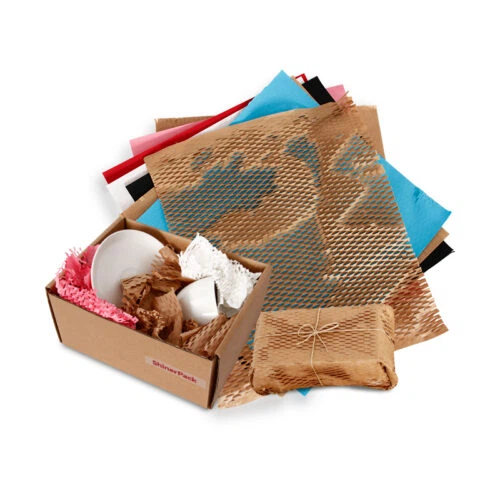
Printed honeycomb paper allows for the customization of packaging with logos, product information, or marketing messages. This can be a great way to enhance the marketing value of the packaging. For instance, a food company can print nutritional information, cooking instructions, or promotional offers on the honeycomb paper used to package its products.
5. Honeycomb Paper Roll
Honeycomb Paper Roll is a convenient form of honeycomb paper. It is wound onto a core, similar to a roll of tape or paper towels. Honeycomb paper rolls are easy to store and transport, and they can be cut to the desired length as needed.
This type of honeycomb paper is widely used in automated packaging systems. In a high - volume production environment, the honeycomb paper roll can be fed into a packaging machine, which can cut, fold, and place the honeycomb paper around the products quickly and efficiently. It is also suitable for on - site packaging, where workers can easily tear off the required amount of honeycomb paper from the roll to package individual items.
In conclusion, the different types of honeycomb paper offer a wide range of properties and applications. Whether you need lightweight cushioning for small items, heavy - duty protection for large products, or customized packaging for marketing purposes, there is a type of honeycomb paper that can meet your needs. As a honeycomb paper supplier, I am committed to providing high - quality honeycomb paper products to our customers. If you are interested in purchasing honeycomb paper for your business, please feel free to contact us for more information and to discuss your specific requirements. We look forward to working with you to find the best honeycomb paper solution for your packaging needs.
References
- Smith, J. (2020). The Science of Honeycomb Structures in Packaging. Journal of Packaging Science, 15(2), 45 - 52.
- Brown, A. (2019). Applications of Honeycomb Paper in Different Industries. Industrial Materials Review, 22(3), 78 - 85.
- Green, C. (2021). Environmental Benefits of Using Honeycomb Paper. Sustainable Packaging Journal, 8(1), 12 - 19.


