


What is the Tensile Strength of 3D Honeycomb Paper Mats?
As a supplier of 3D Honeycomb Paper Mats, I often get asked about the tensile strength of these innovative products. Tensile strength is a crucial property that determines the ability of a material to withstand pulling forces without breaking. In this blog post, I will delve into the concept of tensile strength, explore how it applies to 3D honeycomb paper mats, and discuss its significance in various applications.
Understanding Tensile Strength
Tensile strength is defined as the maximum stress that a material can withstand while being stretched or pulled before it breaks. It is typically measured in units of force per unit area, such as pounds per square inch (psi) or megapascals (MPa). When a material is subjected to a tensile force, it experiences internal stresses that cause it to elongate. If the applied force exceeds the material's tensile strength, the material will fracture.
The tensile strength of a material depends on several factors, including its composition, structure, and manufacturing process. For example, materials with a high degree of molecular alignment or a strong intermolecular bonding tend to have higher tensile strengths. Additionally, the presence of defects or impurities in the material can significantly reduce its tensile strength.
Tensile Strength of 3D Honeycomb Paper Mats
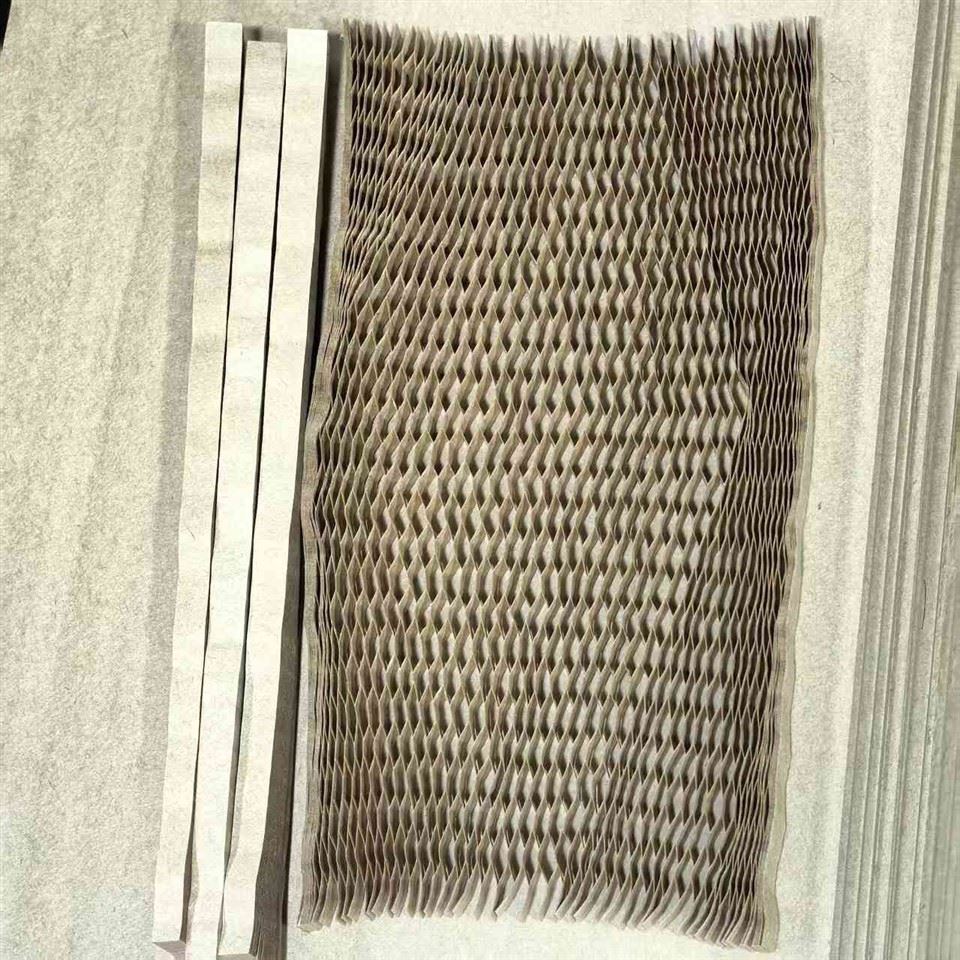
3D honeycomb paper mats are made from paper that is formed into a honeycomb structure. This unique structure gives the mats several advantageous properties, including high strength-to-weight ratio, excellent cushioning, and good shock absorption. The tensile strength of 3D honeycomb paper mats is influenced by several factors, such as the type of paper used, the thickness of the paper, and the size and shape of the honeycomb cells.
Most 3D honeycomb paper mats are made from kraft paper, which is a strong and durable type of paper commonly used in packaging applications. Kraft paper has a relatively high tensile strength due to its long and strong cellulose fibers. The thickness of the paper also plays a role in determining the tensile strength of the mat. Thicker paper generally results in a stronger mat, but it also increases the weight and cost of the product.
The size and shape of the honeycomb cells also affect the tensile strength of the mat. Smaller cells tend to provide greater strength and stiffness, while larger cells offer better cushioning and shock absorption. The shape of the cells can also influence the mat's performance. For example, hexagonal cells are more efficient in distributing stress compared to other shapes, such as square or rectangular cells.
In general, the tensile strength of 3D honeycomb paper mats can range from a few hundred psi to several thousand psi, depending on the specific design and manufacturing process. This makes them suitable for a wide range of applications, from lightweight packaging to heavy-duty industrial uses.
Significance of Tensile Strength in Applications
The tensile strength of 3D honeycomb paper mats is an important consideration in many applications. In packaging, for example, the mats need to be strong enough to withstand the forces exerted during handling, transportation, and storage. A mat with low tensile strength may tear or break easily, leading to damage to the packaged product. On the other hand, a mat with high tensile strength can provide reliable protection and ensure the integrity of the package.
In industrial applications, 3D honeycomb paper mats are often used as a cushioning or shock-absorbing material. The tensile strength of the mats is crucial in these applications to ensure that they can withstand the impact forces without deforming or failing. For example, in the automotive industry, honeycomb paper mats are used to protect delicate components during shipping and assembly. A mat with sufficient tensile strength can prevent damage to the components and reduce the risk of costly repairs.
Another important application of 3D honeycomb paper mats is in construction. The mats can be used as a lightweight and eco-friendly alternative to traditional building materials, such as wood or foam. The high tensile strength of the mats allows them to support heavy loads and provide structural stability. They can be used in flooring, roofing, and wall insulation, among other applications.
Comparing with Other Packaging Materials
When considering the use of 3D honeycomb paper mats, it's useful to compare their tensile strength with other common packaging materials. For instance, foam materials are widely used for cushioning. While foam can offer good shock absorption, its tensile strength is generally lower than that of 3D honeycomb paper mats. Foam can easily tear or break under moderate pulling forces, especially when it is compressed or deformed.
On the other hand, corrugated cardboard is another popular packaging material. Corrugated cardboard has a decent tensile strength, but it may not be as effective as 3D honeycomb paper mats in terms of cushioning. The honeycomb structure of the paper mats allows for better distribution of stress and more efficient absorption of shock, making them a better choice for protecting fragile items.
Plastic films are also used in packaging, but they often lack the tensile strength and environmental friendliness of 3D honeycomb paper mats. Plastic films can be easily punctured or torn, and they are not biodegradable, which can pose environmental challenges.
Factors Affecting Tensile Strength Testing
Accurately measuring the tensile strength of 3D honeycomb paper mats requires careful consideration of several factors. The testing method used can significantly impact the results. There are different standards and procedures for tensile strength testing, such as ASTM D882 for thin plastic sheeting and films, which can be adapted for paper materials.
The sample preparation is also crucial. The sample should be cut from the mat in a way that represents the overall structure and properties of the material. Any damage or irregularities during the cutting process can lead to inaccurate results. Additionally, the testing environment, including temperature and humidity, can affect the performance of the paper mat. Paper is a hygroscopic material, meaning it can absorb and release moisture depending on the surrounding conditions. High humidity can reduce the tensile strength of the paper, while low humidity can make it more brittle.

Future Developments in Tensile Strength of 3D Honeycomb Paper Mats
As technology advances, there is potential for further improvements in the tensile strength of 3D honeycomb paper mats. New types of paper with enhanced properties, such as higher strength and better moisture resistance, could be developed. Additionally, advancements in manufacturing processes could allow for more precise control of the honeycomb structure, leading to improved strength and performance.
For example, the use of nanotechnology could potentially enhance the mechanical properties of the paper. Nanoparticles can be added to the paper pulp to improve its strength, stiffness, and other properties. Another area of development could be in the design of the honeycomb structure. By optimizing the size, shape, and arrangement of the cells, it may be possible to achieve even higher tensile strengths while maintaining other desirable properties.
Conclusion
In conclusion, the tensile strength of 3D honeycomb paper mats is an important property that determines their performance in various applications. The unique honeycomb structure, combined with the use of high-quality paper, gives these mats a relatively high tensile strength, making them suitable for a wide range of uses, from packaging to construction. As a supplier of 3D Honeycomb Paper Mat, I am committed to providing products with excellent tensile strength and other performance characteristics.
If you are interested in learning more about our 3D honeycomb paper mats or have specific requirements for your application, I encourage you to contact us for a detailed discussion. We can provide you with samples for testing and offer customized solutions to meet your needs. Whether you need Honeycomb Paper Roll for continuous packaging operations or Honeycomb Paper In Sheets for specific projects, we have the expertise and products to serve you.
References
- ASTM International. (2023). ASTM D882 - 18 Standard Test Method for Tensile Properties of Thin Plastic Sheeting.
- Smith, J. (2022). The Science of Packaging Materials. Packaging Press.
- Brown, A. (2021). Advances in Paper and Packaging Technology. Journal of Materials Science, 35(2), 45 - 56.


