


When it comes to packaging and cushioning materials, honeycomb paper roll has emerged as a popular choice due to its excellent strength - to - weight ratio, eco - friendliness, and versatility. As a supplier of Honeycomb Paper Roll, I often receive inquiries about the thickness of common honeycomb paper rolls. In this blog post, I'll delve into the details of honeycomb paper roll thickness, its influencing factors, and the appropriate applications for different thicknesses.
Understanding Honeycomb Paper Roll Thickness
Honeycomb paper roll thickness can vary significantly based on a variety of factors. Generally, the thickness of honeycomb paper rolls ranges from a few millimeters to several centimeters. Thinner honeycomb paper rolls, typically in the range of 3 - 5 mm, are often used for light - duty packaging applications. These thin rolls are flexible and can be easily wrapped around small and delicate items to provide basic cushioning. For example, when packaging small electronic components like USB drives or earbuds, a 3 - mm thick honeycomb paper roll can effectively protect the products from minor impacts during transit.
On the other hand, medium - thickness honeycomb paper rolls, usually around 8 - 12 mm, offer enhanced cushioning performance. They are suitable for medium - sized products such as glassware, ceramic items, or small appliances. The increased thickness provides a greater ability to absorb shocks and vibrations, reducing the risk of damage during shipping.
Thicker honeycomb paper rolls, with a thickness of 15 mm or more, are designed for heavy - duty applications. These are often used to package large and heavy items like furniture, machinery parts, or large - screen televisions. The substantial thickness of these rolls can withstand significant impacts and distribute the force evenly across the surface of the packaged item, ensuring maximum protection.
Factors Influencing Honeycomb Paper Roll Thickness
Application Requirements
The primary factor determining the thickness of a honeycomb paper roll is the specific application. As mentioned above, different products require different levels of cushioning. For instance, a high - end luxury watch needs less cushioning compared to a large marble statue. The watch can be safely packaged with a thinner honeycomb paper roll, while the statue demands a much thicker one to prevent breakage.
Transportation Conditions
The mode of transportation and the distance of shipment also play a crucial role. Products that are shipped via air freight may require less cushioning compared to those transported by sea or road. Air freight generally has fewer vibrations and impacts during transit. In contrast, products shipped by road may encounter more bumps and jolts, necessitating a thicker honeycomb paper roll for protection. Similarly, longer - distance shipments are more likely to experience multiple handling processes, increasing the risk of damage, and thus may require a thicker cushioning material.
Cost Considerations
Cost is another important factor. Thicker honeycomb paper rolls typically cost more due to the increased amount of raw materials used in their production. For businesses operating on a tight budget, finding the right balance between cost and protection is essential. In some cases, a slightly thinner honeycomb paper roll may be sufficient if the product is relatively durable and the transportation conditions are not too harsh.
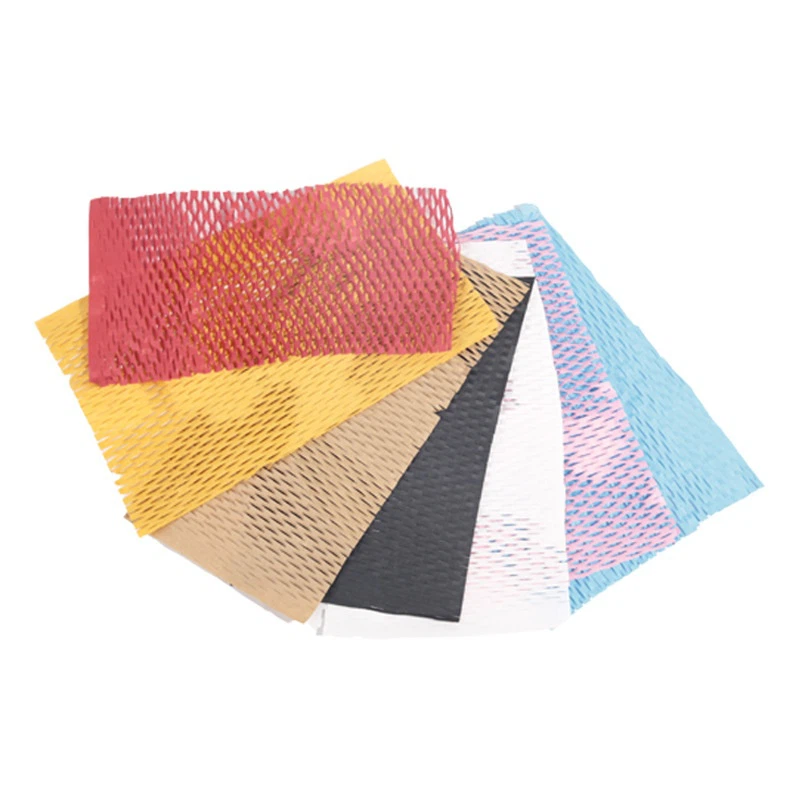

Comparing Honeycomb Paper Roll with Other Honeycomb Paper Products
Apart from honeycomb paper rolls, there are other honeycomb paper products available in the market, such as Honeycomb Paper In Sheets and 3D Honeycomb Paper Mat.
Honeycomb paper sheets are flat and rigid, which makes them ideal for creating custom - sized packaging inserts. They can be cut and shaped according to the product's dimensions. The thickness of honeycomb paper sheets also varies, but they generally offer a more stable and uniform cushioning surface compared to honeycomb paper rolls. For example, when packaging a set of wine bottles, honeycomb paper sheets can be cut into individual compartments to hold each bottle securely.
3D honeycomb paper mats, on the other hand, have a three - dimensional structure that provides enhanced cushioning from all directions. They are often used for packaging irregularly - shaped items. The thickness of 3D honeycomb paper mats can also be adjusted according to the application requirements. However, due to their complex structure, they may be more expensive than honeycomb paper rolls and sheets.
Selecting the Right Thickness for Your Needs
To select the appropriate thickness of honeycomb paper roll for your packaging needs, you need to consider the following steps:
- Assess the Product: Evaluate the size, weight, fragility, and shape of the product to be packaged. A heavy and fragile product will require a thicker honeycomb paper roll.
- Analyze the Transportation Conditions: Consider the mode of transportation, the distance of shipment, and the handling processes involved. If the product will be subjected to rough handling, a thicker roll is advisable.
- Budget Planning: Determine your budget for packaging materials. Try to find a thickness that provides adequate protection within your budget constraints.
Conclusion
In conclusion, the thickness of common honeycomb paper rolls can range from a few millimeters to several centimeters, depending on the application, transportation conditions, and cost considerations. As a supplier of honeycomb paper rolls, I understand the importance of providing the right product to meet your specific needs. Whether you need a thin roll for light - duty packaging or a thick roll for heavy - duty applications, we have a wide range of options available.
If you are interested in purchasing honeycomb paper rolls or have any questions about the appropriate thickness for your products, please feel free to contact us. We are more than happy to assist you in making the right choice for your packaging requirements.
References
- Packaging Machinery Manufacturers Institute. "Packaging Materials Handbook".
- International Safe Transit Association. "Best Practices for Product Packaging".


